Sharing Is Caring: Why Inter-Agency Data Sharing Is So Effin’ Hard

Dear reader,

It’s no mystery that data sharing is hard to do.

Of all my many adventures while plying my trade as a humble government employee, all else paled in comparison to seeking to tame the beast of inter-agency data sharing.  Actually, that’s a lie. It was just another incredibly important and difficult thing to do, alongside challenges like hiring through civil service, and navigating contracts through procurement. There are dedicated, smart, talented people trying to solve these challenges, but they are still deeply troubled systems whose opportunity costs are incredibly steep. Believe me, we pay for them in millions of small ways.

The reasons one might wish to share data with another city agency partner are as myriad as they are obvious: improved access to public services and benefits, reduced data input and management, increased communication and collaboration, happier constituents and service users, more productive staff, and the list goes on.  

Continue reading
Let’s Turn this Old Barn into a Theater! (Part III of III)

Big Car in Indianapolis, IN is a former auto service center.

Dear Reader, About a year ago the Naturally Occurring Cultural Districts (NOCD) working group asked your Man About Town to write a nice, juicy case study about what happens when cultural organizations buy non-cultural facilities and fix them up.  This three part series details my findings, although it’s well worth checking out the original report to see case studies from nearly a dozen cultural organizations across the country.  You can also read Part I and Part II of this series to learn more about the unique opportunities and challenges of adaptive reuse. Continue reading

The Snow Queen (Coming Out As An Artist)

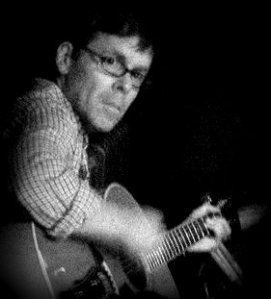
Mike Piemaker Guitar.solo

Man About Town Bares All

There’s something I have to tell you, Dear Reader.  I have a secret life.

I’ve known this about myself since I was 14 years old.  I experimented with this part of who I was a lot while I was in college, but eventually I moved on and settled into a more traditional lifestyle and quietly tucked this side of myself away.  I lived like this for years.

But that’s been changing.  It all started shortly after my first marriage ended, when I was looking for something to take me back out into the world.  Suddenly, this other side of me seemed unavoidable – I felt so compelled to show who I really was, to do it again and again.  I worked on Wall Street at the time, and suddenly it seemed people like me were everywhere and I had never noticed before: hanging out in seedy bars with late night open mics, or sneaking out during our lunch breaks to a quick session in a rented room nearby.  We led a second life complete with different friends, different clothes, different mannerisms, but more fully ourselves.

And then I met my current partner, Ryan.  Unlike me, Ryan had never hid behind another identity.  Ryan is proud, fearless, open, visible.  When, during one of our first dates, Ryan suggested we write a musical together, I knew I could no longer hide who I was.

I am, Dear Reader, a musician. Continue reading

Report Back: NY Grantmakers in the Arts “Creative Placemaking” Panel

Funders, Speakers and your Man About Town walking to the Queens Museum from the Mets-Willets Point 7 Train – Man About Town / Tumblr

Your Man About Town’s middle name is Moderation, Dear Reader; and although it is a somewhat awkward locution when making a full introduction, it nonetheless conveys the important fact that your Man About Town’s middle name is not Tom, Dick or Harry.  I moderate.  I facilitate.  I have even been known, at times, to adjudicate.

So when the New York Chapter of the Grantmakers in the Arts asked if I wouldn’t mind moderating a panel on creative placemaking at the Queens Museum of Art earlier this month, I could no more deny them than I could my very nature.  Or at least, the very nature of my personal brand. Continue reading

Disaster and Recovery – Part II

The Great Wave off Kanagawa: Katsushika Hokusai

The Great Wave off Kanagawa: Katsushika Hokusai

Shortly after hurricanes Katrina and Rita in the Gulf Coast, I was dispatched to New Orleans by the corporate foundation that I worked for to figure out how to deploy our philanthropic disaster recovery commitment.  It was a heartbreaking experience, compounded and complicated by the entrenched challenges New Orleans had struggled with for many years.

As with all natural disasters, the poorest suffered most in the immediate aftermath.  What I, in my ignorance, learned for the first time was how the vulnerable continue to suffer long after the initial damage: tucked away for too long FEMA trailers, or separated from family, friends and vital supports, unable to access medical care, or shuttled from one temporary shelter situation to the next.  Over the weeks, months and years following the storm there were dramatic and terrible increases in elder mortality, child poverty, murder, and mental illness.

Compared to the process of recovery in the Gulf Coast, and in spite of the many frustrations we feel with its pace in our region, New York City, New Jersey and Long Island have done remarkably well.  For most of us, life is essentially back to normal:  the kids are in school, we’re back at work, our homes have power, heat and hot water, and holiday shopping is underway.

But there remains a grave and nearly inevitable danger, as in all natural disasters, that we will “move on” without fully resolving the impacts on those most vulnerable, and inflict the mistakes of the past on our neighbors and fellow citizens tomorrow.  Continue reading

Disaster and Recovery

Lower Manhattan Post Sandy Blackout – Catsonholiday / Instagram

Dear Reader, I’m writing to you from Man About Town’s Brooklyn redoubt – where we have been spared from the very worst of hurricane Sandy.  We never flooded, and we never lost power.  Like so many of you, Mrs. Man About Town and I have been glued to Twitter, NY1, WNYC, the NY Times, and a host of other news sources trying to grapple with the scale of the devastation caused by surging storm waters and wind.  And, like many of you, we’ve wept over the terrible loss of life, and been inspired by the ingenuity and dedication of emergency personnel, public leaders, and generous neighbors.

We will never be the same. Continue reading